



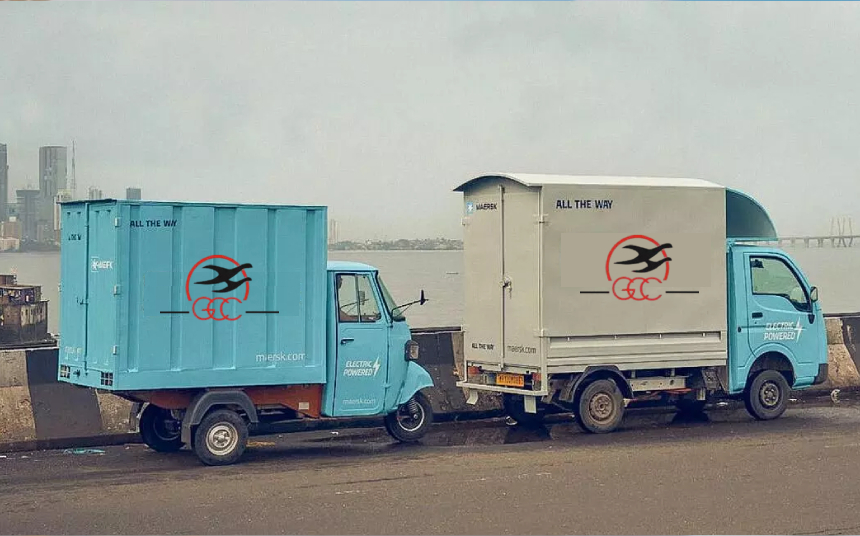
Specialist transport services.
Goods Carrying Cargo works on sustainable transport projects designed to reduce emissions and improve efficiency in last-mile distribution. Many businesses are shifting away from traditional delivery vehicles due to rising fuel expenses, growing traffic congestion, and tightening environmental norms. The requirement in such scenarios is a transport partner that can provide clean, reliable vehicles capable of managing frequent stops, narrow city routes, and varied load demands—while supporting cost control and consistent performance. As a trusted cargo logistics company, Goods Carrying Cargo supports these needs through structured planning and operational readiness.
Project Process
Goods Carrying Cargo begins by studying the logistics requirements and identifying suitable EV three-wheelers or alternative clean-mobility options. As an end-to-end logistics solution provider, the company sets up charging points, arranges training for operational staff, and prepares deployment schedules based on location and load analysis. Rollouts are executed in phases using real-time telematics, route optimisation, and battery tracking for performance stability. This approach strengthens uptime and delivery accuracy, supporting businesses that require dependable last-mile goods delivery services while aligning with long-term sustainability goals.
Requirement Assessment
Goods Carrying Cargo conducts a detailed assessment for FMCG operations by analysing delivery volumes, route patterns, payload categories, and sustainability targets. This helps identify the right electric vehicle configuration needed to support daily movement while reducing emissions and improving overall efficiency.
1
Requirement Assessment
We collaborated with Maersk to understand their delivery volumes, route patterns, payload weights, and emission reduction targets.
3
Charging Infrastructure Setup
Installed charging points at key hubs and depots; ensured grid readiness and backup solutions.
5
Monitoring & Optimization
Deployed telematics to track battery health, energy use, route efficiency; feedback loops to adjust route plans, vehicle allocation.
2
Vehicle Specification & Procurement
Choose EV 3-wheelers capable of the required payload, energy efficiency, and battery capacity. Finalized supplier and delivery schedule.
4
Training & Deployment
Trained drivers in EV operation, safety, battery maintenance; inducted maintenance team. Deployed vehicles in phases to monitor performance.